Showing posts sorted by relevance for query total body. Sort by date Show all posts

Thursday, May 01, 2008

Total Body Formula Lawsuit Filed in Georgia

Today my office filed a lawsuit for a client who claims she was injured because of an unsafe supplement known as Total Body Formula.

You may view the first two pages of the Complaint here.


The Total Body Formula product was sold in eight-ounce and 32-ounce plastic bottles. The Total Body Mega Formula is sold in 32-ounce plastic bottles. Both products are distributed by Total Body Essential Nutrition of Atlanta. The company is the sole distributor of the products and has voluntarily recalled Total Body Formula in the flavors of Tropical Orange and Peach Nectar and Total Body Mega Formula in Orange/Tangerine flavor.

The supplements were recalled, and the recalled Lots are: # 4016801, 4016802, 4024801, 4031801, 4031802 or 4031803.

The liquid dietary supplement products may cause severe adverse reactions, including nausea, vomiting and diarrhea, joint pain and fatigue. These symptoms can be followed by hair loss, nail brittleness and neurological abnormalities (such as numbness and other odd sensations in the hands, arms, legs or feet).

The FDA site informs:

The Florida Department of Health recently provided reports to the FDA on 23 individuals who experienced serious reactions to these products seven to 10 days after ingestion. In all cases, the reactions included significant hair loss, muscle cramps, diarrhea, joint pain and fatigue. The FDA subsequently learned and is investigating a report that some individuals in Tennessee using the same products have experienced similar reactions.

FDA laboratories are analyzing samples of the products to identify the cause of the reactions, including the possibility that the products contain excessive amounts of selenium, which is known to cause symptoms such as those described in the adverse events reported to the agency. Selenium, a trace mineral, is needed only in small amounts for good health.

The products have been distributed in Alabama, California, Florida, Georgia, Kentucky, Louisiana, Michigan, Missouri, New Jersey, North Carolina, Ohio, Pennsylvania, Tennessee, Texas and Virginia.

The FDA is advising consumers in all states to avoid using the products immediately and to discard the products by placing them in a trash receptacle outside of the home.

Source here.


On May 1, 2008, this news from the FDA:

FDA Completes Final Analysis of "Total Body Formula" and "Total Body Mega Formula" Products
Testing reveals high chromium levels in addition to selenium

The U.S. Food and Drug Administration’s final analysis of certain flavors of "Total Body Formula" and "Total Body Mega Formula” has detected hazardous amounts of chromium.

On April 9, 2008, the FDA reported the dietary supplement products contained hazardous amounts of selenium in samples of "Total Body Formula" in Tropical Orange and Peach Nectar flavors and "Total Body Mega Formula" in the Orange/Tangerine flavor. Further FDA analysis of the products found high levels of chromium as well. The samples contained up to 3,426 micrograms of chromium for the recommended serving (17 times the recommended intake). The recommended chromium intake for an adult ranges from 35 to 45 micrograms per day.

Excessive consumption of chromium can cause fatigue, muscle cramps, hyperactivity, hypoglycemia, renal failure and liver toxicity. Excessive chromium intake also can interfere with certain medications.

The new FDA finding comes as the U.S. Centers for Disease Control and Prevention (CDC) reports that the number of confirmed cases of adverse reactions in consumers using the products has climbed to at least 201 individuals in Alabama, Florida, Georgia, Kentucky, Michigan, New Jersey, North Carolina, Tennessee, Texas and Virginia.

Consumers were first cautioned March 27, 2008 not to purchase and to discontinue the use of "Total Body Formula" in Tropical Orange and Peach Nectar flavors and "Total Body Mega Formula" in the Orange/Tangerine flavor after receiving reports of adverse reactions. (http://www.fda.gov/bbs/topics/NEWS/2008/NEW01812.html).

The FDA continues to investigate how excessive amounts of selenium and chromium got into the products.

The sole distributor of the "Total Body Formula" and "Total Body Mega Formula" products has voluntarily recalled the affected products.

Monday, August 18, 2008

Total Body Formula Article in Atlanta Journal Constitution (daily paper)

This weekend the Atlanta Journal Constitution had a lengthy and well written article on Total Body Formula's recall and the recalled product had on several people. One person named in the article is a current client of mine. We've file several lawsuits, and are not part of any class action regarding Total Body Formula.

Here is an excerpt:

At least 197 people in a dozen states —- 53 of them in Georgia —- were sickened earlier this year after taking the liquid supplement Total Body Formula. Their hair fell out in clumps, their fingernails fell off. They suffered nausea, vomiting and fatigue. Some had disabling joint pain, according to the Centers for Disease Control and Prevention and state health officials.

Doctors treating 21-year-old Felicia Blasingame of Acworth this spring first thought she had the flu, then tested her for everything from parasites to lupus to rheumatoid arthritis, trying to figure out what was causing her nausea, seizures, knee pain and hair loss, she said.

Edgar Gurley, 78, of Marietta said he went from being active and healthy to suddenly in January battling a cascading array of symptoms, including diarrhea, fatigue and confusion. Gurley said doctors struggled to explain why his blood chemistry and thyroid levels were out of whack, his kidneys were failing and his hair was falling out.

As their symptoms worsened, Blasingame and Gurley said they continued to take their daily 1-ounce dose of Total Body Formula, thinking it was critical to their health.

Yet several batches of Total Body Formula and Total Body Mega Formula contained hazardous amounts of the mineral selenium —- up to 40,800 micrograms per serving, 200 times the amount listed on the product’s label, according to the U.S. Food and Drug Administration.

The FDA is still investigating how this happened, and state health officials are still tallying the human toll.

Because of several pending lawsuits, lawyers for three companies involved in the manufacture and sale of Total Body products declined to discuss what happened.


Go here for the complete article.

Monday, March 31, 2008

Total Body Formula Recall - Information You Can Use

Total Body Formula has been recalled. The liquid dietary supplement products may cause severe adverse reactions, including nausea, vomiting and diarrhea, joint pain and fatigue. These symptoms can be followed by hair loss, nail brittleness and neurological abnormalities (such as numbness and other odd sensations in the hands, arms, legs or feet).

Read more below; if you have concerns or questions, call me at Toll Free 866-755-LAWS, or email me at ageorgialawyer@yahoo.com.


Consumers are being told not to buy or use Total Body Formula in Tropical Orange and Peach Nectar flavors and Total Body Mega Formula in Orange/Tangerine flavor. These products are available in 32-ounce plastic bottles and are distributed by Total Body Essential Nutrition of Atlanta.

The products have been distributed in: Alabama, California, Florida, Georgia, Kentucky, Louisiana, Michigan, Missouri, New Jersey, North Carolina, Ohio, Pennsylvania, Tennessee, Texas and Virginia.

Lot numbers include: 4016801, 4016802, 4024801, 4031801, 4031802 and 4031803.

From the FDA:

The FDA notified healthcare professionals and patients that it has found hazardous levels of selenium in samples of certain flavors of the dietary supplement products "Total Body Formula" and "Total Body Mega Formula." Analyses of samples by FDA have found most of the samples contain extremely high levels of selenium -- up to 200 times the amount of selenium indicated on the labels of the products.

The FDA has received 43 reports of persons from nine states who experienced serious adverse reactions using these products. The adverse reactions generally occurred after five to 10 days of daily ingestion of the product, and included significant hair loss, muscle cramps, diarrhea, joint pain, deformed fingernails, and fatigue. Consumers should stop taking the products and consult their healthcare professional if they experience any adverse events associated with the use of the products.

Monday, July 28, 2008

Total Body Formula Recall Makes News In Georgia Paper

My office has filed several lawsuits - NOT a class action - involving the Total Body Formula and Total Body Mega Formula recall.

In March, the FDA had warned consumers not to purchase or consume Total Body Formula in the flavors of Tropical Orange and Peach Nectar, or Total Body Mega Formula in the Orange/Tangerine flavor. The liquid dietary supplement products may cause severe adverse reactions, including significant hair loss, muscle cramps, diarrhea, joint pain and fatigue.

From an Athens, Georgia paper there was an article regarding the recalled products. The article refers to Total Body Formula as a "diet aid," although I would not have used those two words to describe the product.

More here.

Sunday, April 27, 2008

Total Body Formula Recalled

A Supplement has been recalled because of an error in its preparation.

The Total Body Formula products were sold in eight-ounce and 32-ounce plastic bottles. The Total Body Mega Formula is sold in 32-ounce plastic bottles. Both products are distributed by Total Body Essential Nutrition of Atlanta. The company is the sole distributor of the products and has voluntarily recalled Total Body Formula in the flavors of Tropical Orange and Peach Nectar and Total Body Mega Formula in Orange/Tangerine flavor.


Recalled Lots are: # 4016801, 4016802, 4024801, 4031801, 4031802 or 4031803.

The liquid dietary supplement products may cause severe adverse reactions, including nausea, vomiting and diarrhea, joint pain and fatigue. These symptoms can be followed by hair loss, nail brittleness and neurological abnormalities (such as numbness and other odd sensations in the hands, arms, legs or feet).

Link, here.

Thursday, October 23, 2008

Total Body Formula Litigation: MDL is in AL

In the Total Body Formula lawsuits, the MDL for all of the litigation, including the Total Body Class Action, will be Birmingham, Alabama. Judge Proctor drew the cases.

The Transfer Order may be found here. (PDF Alert)

Expect an initial hearing in Birmingham soon.

Monday, August 23, 2010

Total Body Cleanse Lawsuits

Total Body Cleanse Lawsuit information:

In a filed lawsuit, the Plaintiff claims Jillian Michaels'  "Triple Process Total Body Detox & Cleanse" diet supplement contains a "potentially lethal combination of toxic ingredients" ... and it "might kill you."

In the suit, R.D. lays out what she considers to be the risks associated with various ingredients in Jillian's product, including:

-- Irish Moss Powder ... "causes gastrointestinal ulcers" and is "so toxic that it is the gel commonly applied to aircraft wings to dissolve ice"
-- Bearberry ... "known to cause nausea and vomiting"
-- Yarrow ... "a toxic lawn weed that causes dermatitis"
-- Chinese Rhubarb ... "a harsh laxative and dangerous diuretic that can cause sever dehydration and may cause irreversible liver damage"
-- Fenugreek Seed ... "interferes with digestion and causes both diarrhea and gas"

Wednesday, October 08, 2008

Total Body Formula Lawsuit: State Court Hearing 10/13/08

On Monday October 13, 2008 at 9:00 a.m. in Decatur, GA Judge A. Wong will hold the first hearing on cases involving folks who claim they were injured by a supplement known as Total Body Formula and Total Body Mega Formula.

I and others will attend. Judge Wong will consider a proposed Case Management Order on the currently filed cases.

Stay tuned.

Wednesday, September 24, 2008

Total Body Formula Update: MDL Hearing in Boston 9/25

Our office is investigating claims of people who were hurt by a recalled dietary supplement called Total Body Formula.

On September 25, 2008, one of my law partners will be attending a Federal Court hearing in Boston that will address a request to centralize the USDCT court cases in one court. The process is referred to as Multidistrict Litigation, or "MDL."


Multidistrict litigation is a procedure utilized in the federal court system to transfer to one federal judge all pending civil cases of a similar type filed throughout the United States. The decision whether cases should be transferred is made by a panel of seven federal judges appointed by the Chief Justice of the United States Supreme Court. The Judicial Panel on Multidistrict Litigation meets periodically to review requests that cases be consolidated for pretrial matters pursuant to 28 U.S.C. § 1407

Some folks I have spoken with have asked if the MDL Court is the same as a class action - it is not.

Although class actions may be transferred to an MDL consolidation in the same manner as single plaintiff cases. For cases to be treated as proper for an MDL, however, consolidation the Panel must find they one or more common questions of fact. Since commonality is also an required element for a class action, class actions are frequently litigated in MDL proceedings.

As to the Total Body Formula litigation, each Defendant would like the cases heard in Alabama. Others have asked for an MDL Court in FL or LA.

Stay tuned.

Tuesday, April 11, 2006

The Widening Scandal: Contaminated Bone and Tissue Implants

My office is investigating what to me are some of the most disturbing claims I have run across as an attorney. Patients have had implanted in them without their knowledge infected or contaminated bone and tissue parts while undergoing surgery for a back injury, a dental injury, or a fusion. Good hardworking people are now suddenly getting sick. Some have been diagnosed as having Hepatitis B or C, or worse. I wanted to jot down in a longer form what is happening to these folks to alert counsel across the country.


Bone and Tissue for Sale- How this scandal began

The practice of illegal trafficking in human organs, body parts, and tissue has made the news lately, and people have been indicted over the practice. Paitents who had bone or tissue implants placed in them without their knowledge are now getting sick and developing diseases like Hepatitis B and worse.

While the scandal of stealing bones from cadavers being falsely certified as clean continues to erupt in the headlines and the courtrooms, where did this mess all start? I can trace it back to UCLA’s Director of the Willed Body Program, Henry Reid. Reid was arrested and a criminal investigation launched several years ago.

The UCLA Medical Center investigation started in 1998. In March of 2004 Ernest Nelson was arrested - he claimed to have paid Director Reid hundreds of thousands of dollars for permission to enter the UCLA body freezer and and harvest body parts from hundreds of cadavers. You can read more here
about the arrest. The Los Angeles Times reported in 2004 that it was shown invoices on a UCLA letterhead indicating 496 cadavers were sold for a total of $704,600 between 1998 and 2003. One client was pharmaceutical giant Johnson & Johnson. Go here for the article.

Companies in the medical industry pay for a wide range of body parts including skin, scalps, teeth, skulls and bones, which are then used for among other things surgery. Heart valves can fetch $5,000 to $7,000 each. Skin, used to dress the wounds of burn victims, can go for $1,000 a square foot.If a single body could provide all its organs, the cadaver would be worth $150,000.

In 2004, Johnson & Johnson was named in court documents as having contracted with Nelson for human tissue. Later, a California law firm filed a class action.

The quest to have a class certified in that state failed. The California Court of Appeal issued a decision that may materially affect the ability to certify the matter. In Bennett v. The Regents of the University of California, 133 Cal.App.4th 347 (2005), the Court of Appeals, in dicta, implied that cases involving the mishandling of human remains do not generally lend themselves to class certification.

The Risk:

One of the risks associated with the illegal harvesting or snatching of body parts is that the ones who do it avoid screening and testing procedures set up and maintained to ensure recipients will not receive diseased or contaminated tissue, bone, or organs. With the possibility that many patients could receive tissue or bone from a single infected cadaver, the potential for a medical catastrophe cannot be minimized.

The FDA has issued reports on the harvesting, and in December of 2005 wrote on its website:

The Food and Drug Administration (FDA) is notifying the public of its investigation of human tissue recovered by Biomedical Tissue Services, Ltd (BTS) of Fort Lee, NJ and sent to tissue processors. Some of this tissue (e.g., human bone, skin, tendons) may have been implanted into patients from early 2004 to September 2005. The tissue was recovered by BTS from human donors who may not have met FDA donor eligibility requirements and who may not have been properly screened for certain infectious diseases.

Of special interest to periodontists are LifeCell Corporation, which produces Alloderm for BioHorizons, Inc., and Totugen Medical Inc, which produces Puros for Zimmer Dental. No adverse reactions related to these tissues have been reported at this time and the FDA and the Centers for Disease Control (CDC) believe the risk of infection from these tissues is low. It is important to determine whether the allograft material is from the recalled lots. Dentists and physicians who have obtained tissue affected by the recall should have been notified by now

You can find that information by going here. This news was preceeded by an October 2005 alert titled: FDA Provides Information on Investigation into Human Tissue for Transplantation, which can be found here.

In November, Medtronic informed the FDA that it had tracked 13,000 contaminated samples, and had 8,000 implanted.

News in 2006

In Brooklyn New York, more than one thousand bodies are part of the District Attorney’s investigations into the theft and sale of bones and other body parts removed from fresh corpses at several funeral homes, without permission. These were then sold to BioMedical Tissue Services, a Fort Lee, N.J., tissue recovery company run by Michael Mastromarino. There have been indictments issued, and they were handed down in February of this year. Go here for more information. The prosecutor has been quoted as saying that the case was "like something out of a cheap horror movie." Bones were replaced with everything from broomsticks and pipes to plumbing supplies. An AP photo can be found below showing just that:


BTS is not alone. Lifecell Inc. has issued a recall of certain products made from body parts acquired from BioMedical Tissue Services. They are AlloDerm, used for plastic surgery, burn and periodontal procedures; Repliform used for gynecological and urological surgical procedures; and GraftJacket, used for orthopedic applications and lower extremity wounds.

The Philadelphia Inquirer reported last month that more indictments are expected.

In addition, many medical facilities and hospitals have directly written to patients to notify them of the possibility that they may have contracted any one or more of a number of serious and even life-threatening diseases from the bone or tissue grafts they received.

For example, The North Shore-Long Island Jewish Health System has mailed letters to former patients alerting them that they may have been exposed to potentially contaminated body parts. The letters state the hospital had indirectly received human bone, skin and tendons from BioMedical Tissue Services, which may not have properly screened the items for infectious diseases.

Health officials are concerned that tens of thousands of people across the country, and possibly more on Long Island, may have been exposed by untested parts from BTS

BioMedical is already being sued by many who claim a relative’s body parts were stolen from the grave and sold to the New Jersey company. Hundreds are already being tested for various diseases. BTS supplied bone, skin and tendons to various processors, who in turn provided them to distributors.

From the news developing, many of the body parts used on Long Island were purchased from BioMedical by a Florida tissue bank responsible for testing and sterilizing every body part it buys. Regeneration Technologies, based in Gainesville has or will be inmplicated.


Based upon the revelations so far, the scandal involving body parts, tissue, and bones promises to be major news for the next eighteen months or more.

Sources include:
nypress.comas well as articles on newsinferno and the daily news, and the FDA or at www.bonescandal.com

Monday, August 09, 2010

Total Body Cleanse Lawsuits

  "Biggest Loser" trainer Jillian Michaels sells a diet supplement, the Triple Process Total Body Detox & Cleanse, that "just might kill you," according to a lawsuit. .
  
It has been claimed that the product Contains a potentially lethal combination of toxic ingredients that can cause ulcers, nausea, vomiting, dehydration, liver damage, and diarrhea the class claims which is not how consumers expect to be 'detoxed and cleansed.'

 The claimed dangerous ingredients are:
  • Irish Moss Powder: "causes gastrointestinal ulcers" and is "so toxic that it is the gel commonly applied to aircraft wings to dissolve ice"
  • Bearberry: "known to cause nausea and vomiting"
  • Yarrow: "a toxic lawn weed that causes dermatitis"
  • Chinese Rhubarb: "a harsh laxative and dangerous diuretic that can cause sever dehydration and may cause irreversible liver damage"
  • Fenugreek Seed: "interferes with digestion and causes both diarrhea and gas."
Enhanced by Zemanta

Tuesday, March 26, 2013

March 26 , 2013: Omontys Recall - Background

Almost a year ago, Omontys was approved by the FDA.


The U.S. Food and Drug Administration today approved Omontys (peginesatide) to treat anemia, a condition in which the body does not have enough healthy red blood cells, in adult dialysis patients who have chronic kidney disease (CKD).
http://www.fda.gov/NewsEvents/Newsroom/PressAnnouncements/ucm297464.htm

What is anemia? From the NIH:
Anemia is a condition in which your blood has a lower than normal number of red blood cells.

Anemia also can occur if your red blood cells don't contain enough hemoglobin (HEE-muh-glow-bin). Hemoglobin is an iron-rich protein that gives blood its red color. This protein helps red blood cells carry oxygen from the lungs to the rest of the body.
If you have anemia, your body doesn't get enough oxygen-rich blood. As a result, you may feel tired or weak. You also may have other symptoms, such as shortness of breath, dizziness, or headaches.
Severe or long-lasting anemia can damage your heart, brain, and other organs in your body. Very severe anemia may even cause death.

Overview

Blood is made up of many parts, including red blood cells, white blood cells, platelets (PLATE-lets), and plasma (the fluid portion of blood).

Red blood cells are disc-shaped and look like doughnuts without holes in the center. They carry oxygen and remove carbon dioxide (a waste product) from your body. These cells are made in the bone marrow—a sponge-like tissue inside the bones.

White blood cells and platelets (PLATE-lets) also are made in the bone marrow. White blood cells help fight infection. Platelets stick together to seal small cuts or breaks on the blood vessel walls and stop bleeding. With some types of anemia, you may have low numbers of all three types of blood cells.
Anemia has three main causes: blood loss, lack of red blood cell production, or high rates of red blood cell destruction. These causes might be the result of diseases, conditions, or other factors.

http://www.nhlbi.nih.gov/health/health-topics/topics/anemia/

Continuing with the 2012 FDA report:
Omontys is a new erythropoiesis-stimulating agent (ESA) that aids in the formation of red blood cells. It works by stimulating the bone marrow to produce more red blood cells, usually measured as hemoglobin levels, to reduce the need for transfusions in patients with CKD. Omontys is administered as a once-a-month injection.

“Omontys represents the first new FDA-approved and marketed ESA for this condition since 2001,” said Richard Pazdur, M.D., director of the Office of Hematology and Oncology Products in the FDA’s Center for Drug Evaluation and Research. “This new drug offers patients and health care providers the convenience of receiving ESA therapy just once per month instead of more frequent injections.”
Two randomized, active-controlled, open-label, multi-center clinical trials demonstrated the safety and efficacy of Omontys in patients with CKD who were on dialysis. The trials randomly selected a total of 1,608 patients with hemoglobin levels initially stabilized by ESA to receive either Omontys once monthly or to continue their current ESA (epoetin) treatment. Results showed Omontys was as safe and effective as epoetin in maintaining hemoglobin levels within the studies’ pre-specified range of 10 to 12 grams per deciliter.
The most common side effects observed in 10 percent or more of dialysis patients treated with Omontys were diarrhea, vomiting, high blood pressure (hypertension) and joint, back, leg or arm pain (arthralgia).
Omontys should not be used in patients with CKD who are not receiving dialysis or in patients with cancer–related anemia, according to the FDA-approved labeling. It also should not be used as a substitute for red blood cell transfusions in patients who require immediate correction of anemia. Omontys has not been shown to improve symptoms of anemia, physical functioning or health-related quality of life in patients with CKD on dialysis.
The FDA approved Omontys with a Risk Evaluation and Mitigation Strategy (REMS), which added safety measures consisting of educational elements for health care professionals and a requirement to assess drug use data.

Now fast forward to 2013, with the recall of this product. 
 Affymax, Inc. and Takeda Pharmaceutical Company Limited along with the U.S. Food and Drug Administration (FDA) are informing the public of a voluntary recall of all lots of OMONTYS® (peginesatide) Injection to the user level as a result of new postmarketing reports regarding serious hypersensitivity reactions, including anaphylaxis, which can be life-threatening or fatal.
To date, fatal reactions have been reported in approximately 0.02% of patients following the first dose of intravenous administration. The reported serious hypersensitivity reactions have occurred within 30 minutes after such administration of Omontys. There have been no reports of such reactions following subsequent dosing, or in patients who have completed their dialysis session. Since launch, more than 25,000 patients have received Omontys in the postmarketing setting.  The rate of overall hypersensitivity reactions reported is approximately 0.2% with approximately a third of these being serious in nature including anaphylaxis requiring prompt medical intervention and in some cases hospitalization.
BACKGROUND: Omontys (peginesatide) Injection is indicated for the treatment of anemia due to chronic kidney disease in adult patients on dialysis and is packaged in 10 mg and 20 mg Multi-dose vials:
  • 10mg Multi-dose Vials - NDC 64764-610-10  Lots C18685, C18881, C19258
  • 20mg Multi-dose vials - NDC 64764-620-20  Lots C18686, C18696

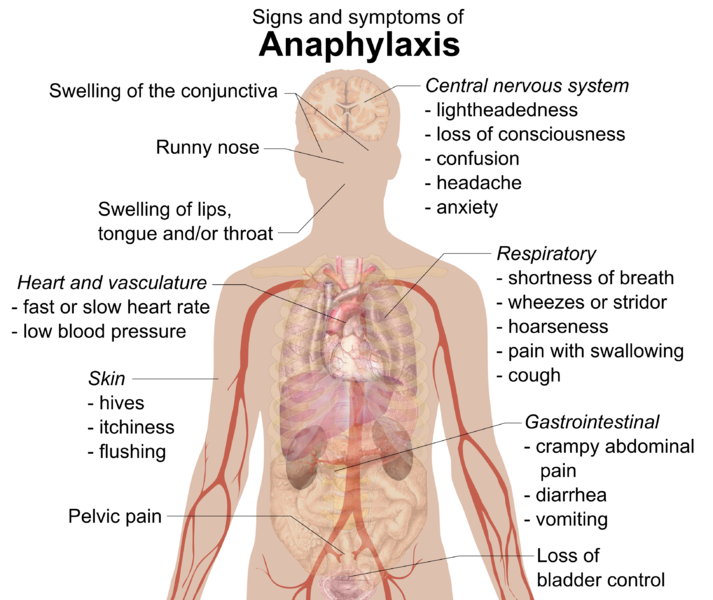
What is anaphylaxis? 

File:Signs and symptoms of anaphylaxis.png

Anaphylaxis is a serious allergic reaction that is rapid in onset and may cause death. It typically causes a number of symptoms including an itchy rash, throat swelling, and lowblood pressure. Common causes include insect bites/stings, foods, and medications.
On a pathophysiologic level, anaphylaxis is caused by the release of mediators from certain types of white blood cells triggered either by immunologic or non-immunologic mechanisms. It is diagnosed based on the presenting symptoms and signs. The primary treatment is injection of epinephrine, with other measures being complementary.

http://en.wikipedia.org/wiki/Anaphylaxis

Thursday, April 30, 2009

Excessive Selenium Kills 21 Polo Ponies

My office is investigating the damage selenium has caused to people who took an over the counter supplement known as Total Body Formula. This week there is news that selenium killed nearly two dozen horses:

The 21 polo horses that died last week shortly before they were to compete in the U.S. Open polo tournament fell victim to a fatal overdose of selenium, a mineral ingredient in a medication meant to help them recover from exhaustion, according to Florida's state veterinarian.

"Signs exhibited by the horses and their rapid deaths were consistent with toxic doses of selenium," Dr. Thomas J. Holt said today of the circumstances surrounding the loss of the horses, which were all owned by the Venezuela-based Lechuza Caracas team.

The medication was prepared by an Ocala, Fla., retail and compounding pharmacy called Franck's Pharmacy at the request of the veterinarian who treated Lechuza's horses while in Florida. Franck's Pharmacy announced last week that an internal review prompted by the horses' deaths showed that the compound, a substitute for a medication called Biodyl that is unapproved for use in the U.S., was mixed incorrectly.

Sources are many, including here.


Reblog this post [with Zemanta]

Tuesday, August 19, 2008

Total Body Formula News Report

My client was interviewed on a local Atlanta station:

What Happens After a Recall?

As the news spreads about the voluntary recall of Total Body Formula, what is particularly striking to me is how the news of the recall makes it to consumers. From the many folks I talk with every month on a variety of matters, it seems that most consumers don't know of recalls, and as of yet there is no uniform method as to recalls.

From today's Wall Street Journal:

"The recall itself is touted as a powerful tool of regulators for keeping consumers safe, and the Consumer Product Safety Commission points to the growing number of recalls as an indication that the system is working to protect consumers. But sometimes, not enough is done beyond the announcement to ensure that consumers and all retailers know about the recall.

The CPSC is charged with ensuring that roughly 15,000 products in the U.S. marketplace today are safe to use. Yet, when a product is cited as a hazard, it is mainly up to the consumer to learn about the recall and take action. Unlike Ms. Bykowski, few consumers do.

On average, just 15% to 30% of consumers who have purchased a defective product respond when the item is recalled, says the CPSC. Responses can rise to about 60% for higher-profile recalls that include some children's products or home appliances. But often more than two-thirds of recalled products go unaccounted for, leaving children and adults vulnerable to injuries ranging from lead poisoning caused by mouthing certain toys to burns from overheated fax machines.

That is because the notification, which relies in part on press releases that may or may not be picked up by the media, is often lax or low-tech. And many consumers simply don't want to deal with the paperwork or the hassle of mailing something back, especially large items, like a crib, which has to be disassembled. Of course many consumers may never learn of the recall."

The article goes on to note: "The recall system just doesn't work," said Nancy Cowles, executive director of Kids in Danger, a Chicago child-safety advocacy group. "The very concept is backwards." She cited the need to improve the safety of products before they reach store shelves."

Link here.

Wednesday, May 02, 2012

May 2, 2012 DMAA Product List

We've been investigating products regarding DMAA for some time now, and with news this past week from the FDA about warnings over DMAA, have compiled this list of products:

Distributor/Manufacturer        Product

Total Body Nutrition                1,3 D Bomb 1,3 D Nox

CTD Labs                                  Adralin

Serious Nutrition Solutions     Adrena-G

United Health                           Avidex

These are in addition to those noted by the FDA


 Exclusive SupplementsBiorhythm SSIN Juice
 Fahrenheit NutritionLean Efx
 Gaspari NutritionSpirodex
 iSatori Global Technologies, LLCPWR
 Muscle Warfare, Inc.Napalm
 MuscleMeds Performance TechnologiesCode Red
 Nutrex ResearchHemo Rage Black
Lipo-6 Black Ultra Concentrate
Lipo-6 Black
Lipo-6 Black Hers Ultra Concentrate
Lipo-6 Black Hers 
 SEI PharmaceuticalsMethylHex 4,2 
 SNI LLCNitric Blast
 USP Labs, LLCOxy Elite Pro
Jack3D 


Enhanced by Zemanta

Thursday, March 15, 2012

March 2012 Pradaxa News for GA and FL


Pradaxa Use

Pradaxa is a blood thinning agent (anticoagulant) that is prescribed to reduce the risk of stroke in patients with non-valvular atrial fibrillation. Pradaxa is manufactured by Boehringer Ingelheim. The U.S. Food and Drug Administration, FDA, approved Pradaxa on October 19, 2010.

FDA Safety Communication Regarding Pradaxa Serious Bleeding Events

In a Safety Communication dated December 7, 2011, the FDA stated that it is currently evaluating post-marketing reports of serious bleeding events in patients taking Pradaxa (dabigatran etexilate mesylate). While bleeding is a known complication of blood thinning medications, the FDA wishes to determine if life threatening bleeding complications occur more commonly with Pradaxa than would be expected.
Because Pradaxa is prescribed to reduce the risk of blood clot formation the FDA advised that patients should not stop taking Pradaxa without talking to their healthcare professional first. The FDA also advised that patients should call their healthcare professional and seek immediate care if they develop any signs or symptoms of bleeding such as:
  • Unusual bleeding from the gums
  • Nose bleeding that happens often
  • Menstrual or vaginal bleeding that is heavier than normal
  • Bleeding that is severe or that you cannot control
  • Pink or brown urine
  • Red or black stools (looks like tar)
  • Bruises that happen without a known cause or that get larger
  • Coughing up blood or blood clots
  • Vomiting blood or vomit that looks like coffee grounds
In addition to the FDA’s efforts, Pradaxa is being monitored for an increased risk of serious or irreversible bleeding by drug regulatory agencies worldwide. According to the European Medicines Agency as of November 6, 2011, a worldwide total of 256 spontaneous case report of serious bleeding resulting in death were recorded in association with the use of Pradaxa.

Pradaxa Bleeding Risks and Irreversible Bleeding

In January of 2012 the FDA posted on its website revised product labeling for Pradaxa.  The revised label indicates that at this time, there is no specific agent or medication that will reverse a Pradaxa bleeding event.  Instead, the patient’s body must eliminate Pradaxa via the renal (kidney) system.  Further complicating this matter is that Pradaxa’s anticoagulant (blood thinning) activity and half-life are increased in patients with kidney impairment.

The FDA site has this information:

The U.S. Food and Drug Administration (FDA) is evaluating post-marketing reports of serious bleeding events in patients taking Pradaxa (dabigatran etexilate mesylate). Pradaxa is a blood thinning (anticoagulant) medication used to reduce the risk of stroke in patients with non-valvular atrial fibrillation (AF), the most common type of heart rhythm abnormality.
Facts about Pradaxa
(dabigatran etexilate mesylate)
  • A blood thinner (anticoagulant) known as a direct thrombin inhibitor.
  • Approved to reduce the risk of stroke and blood clots (systemic embolism) in patients with non-valvular atrial fibrillation.
  • Available as 75 mg and 150 mg oral capsules.
  • From approval in October 2010 through August 2011, a total of approximately 1.1 million Pradaxa prescriptions were dispensed and approximately 371,000 patients received Pradaxa prescriptions from U.S. outpatient retail pharmacies.1
At this time, FDA continues to believe that Pradaxa provides an important health benefit when used as directed and recommends that healthcare professionals who prescribe Pradaxa follow the recommendations in the approved drug label (SeeAdditional Information for Healthcare Professionals).  
Patients with AF should not stop taking Pradaxa without talking to their healthcare professional. Stopping use of blood thinning medications can increase their risk of stroke. Strokes can lead to permanent disability and death.
Bleeding that may lead to serious or even fatal outcomes is a well-recognized complication of all anticoagulant therapies. The Pradaxa drug label contains a warning about significant and sometimes fatal bleeds. In a large clinical trial (18,000 patients) comparing Pradaxa and warfarin, major bleeding events occurred at similar rates with the two drugs.


Monday, December 21, 2009

Does Chelation Therapy Cause Heart Injuries?

Chelation therapy is a recognized treatment for heavy metal (such as lead) poisoning. EDTA (Ethylenediamine tetraacetic acid) is injected into the blood and binds the metals, allowing them to be removed from the body in the urine.A potent chelator of cations, especially calcium, it is FDA-approved only for rapid, emergency treatments of hypercalcemia or digitalis toxicity,and for those indications it has long been obsolete. Source.

Na2EDTA is specifically contraindicated for “generalized arteriosclerosis.” Its labeling includes a “black box” warning: “The use of this drug in any particular patient is recommended only when the severity of the clinical condition justifies the aggressive measures associated with this type of therapy." You can find the warning here: http://www.circare.org/foia2/endrate_ppi19740716.pdf


Chelation therapy is not approved by the FDA to treat coronary artery disease, but some physicians and alternative medicine practitioners use it for this purpose.

In August 2002, the National Center for Complementary and Alternative Medicine (NCCAM) and the National Heart, Lung, and Blood Institute (NHLBI), which are both components of the National Institutes of Health (NIH), announced the launch of the Trial to Assess Chelation Therapy (TACT). This placebo-controlled, double-blind study involves participants age 50 years and older who’ve had a heart attack, and is expected to reach a total enrollment of 1,950. Participants are representative of the U.S. population.

Last August, the federal Office of Human Research Protections began a probe into whether the people in the study were being fully informed of risks and adequately protected. Researchers then suspended enrollment.

The most common immediate side effects of oral chelation therapy include: skin rashes, redness and swelling, headaches, diarrhea, nausea, fainting, fatigue, joint pain, body aches, cramps and convulsions.

Kidney damage from chelation therapy has resulted in permanent damage requiring ongoing dialysis. Deaths have also occurred during chelation therapy from kidney failure and cardiac arrhythmia.

Death and permanent injury have resulted from chelation therapy, even in doctor-supervised clinical trials. The American Heart Association warns of severe and life-threatening side effects and does not endorse chelation as a treatment for heart disease.

Other observers have reported cases of hypocalcemia leading to cardiac arrhythmias and tetany; kidney damage; decreased blood clotting ability with abnormal bleeding; thrombophlebitis and embolism; hypoglycemia and insulin shock; severe vasculitis and autoimmune related hemolytic anemia, dermatitis with pruritus and generalized eczema; and extensive clumping of platelets in the blood of some patients with atherosclerosis and other chronic diseases.


Reblog this post [with Zemanta]

Tuesday, April 10, 2012

FDA Sends Warning Letter to California Orthopedic & Spine Device Company


The FDA recently conducted an inspection of a company in California, Orthopedic Alliance, and the inspection results are posted on the FDA site. The company was found to not be  in conformity with the "current good manufacturing practice requirements of the Quality System regulation." The violations included failure to establish and maintain procedures for implementing corrective and preventative actions and failure to establish and maintain procedures for control and distribution of the finished devices.

Here's an excerpt of the letter:

During an inspection of your firm located in Murrieta, California, on July 20, 2011, through September 23, 2011, investigators from the United States Food and Drug Administration (FDA) determined that your firm manufactures various orthopedic implant devices, including the SC Total Hip System and the SC Ceramic Ball Heads. Under Section 201(h) of the Federal Food, Drug, and Cosmetic Act (the Act), 21 U.S.C. § 321(h), these products are devices because they are intended for use in the diagnosis of disease or other conditions or in the cure, mitigation, treatment, or prevention of disease, or they are intended to affect the structure or function of the body.

This inspection revealed that these devices are adulterated within the meaning of Section 501(h) of the Act (21 U.S.C. § 351(h)), in that the methods used in, or the facilities or controls used for, their manufacture, packing, storage, or installation are not in conformity with the current good manufacturing practice requirements of the Quality System regulation found at Title 21, Code of Federal Regulations (CFR), Part 820. We received a response from Mr. Arnold Neves, Jr., dated September 30, 2011, concerning our investigator's observations noted on the Form FDA 483, List of Inspectional Observations, that was issued to your firm. We address this response below, in relation to each of the noted violations. These violations include, but are not limited to, the following:

1. Failure to establish and maintain procedures for implementing corrective and preventive action (CAPA), as required by 21 CFR 820.100(a).
 
For example, your firm's General Counsel Representative stated that there was no corrective and preventive action procedure.

We reviewed your firm's response and conclude that it is not adequate. Your firm stated that two of its employees will be attending a CAPA workshop in early October, 2011, and that the CAPA procedure will be implemented in sixty days. However, neither procedures nor additional procedural details have been submitted for our review. In addition, your firm did not provide a rationale for requiring up to sixty days to complete this corrective action.

2. Failure to establish and maintain procedures for receiving, reviewing, and evaluating complaints by a formally-designated unit, as required by 21 CFR 820.198(a).


http://www.fda.gov/ICECI/EnforcementActions/WarningLetters/2012/ucm297260.htm

Sunday, January 26, 2014

Update on Emergency Department Visits Involving Energy Drinks: A Continuing Public Health Concern

From the DAWN Report/Network:

Energy drinks are flavored beverages containing high amounts of caffeine and typically other additives, such as vitamins, taurine, herbal supplements, creatine, sugars, and guarana, a plant product containing concentrated caffeine. These drinks are sold in cans and bottles and are readily available in grocery stores, vending machines, convenience stores, and bars and other venues where alcohol is sold. These beverages provide high doses of caffeine that stimulate the central nervous system and cardiovascular system. The total amount of caffeine in a can or bottle of an energy drink varies from about 80 to more than 500 milligrams (mg), compared with about 100 mg in a 5-ounce cup of coffee or 50 mg in a 12-ounce cola.1 Research suggests that certain additives may compound the stimulant effects of caffeine. Some types of energy drinks may also contain alcohol, producing a hazardous combination; however, this report focuses only on the dangerous effects of energy drinks that do not have alcohol.

Although consumed by a range of age groups, energy drinks were originally marketed to appeal to youths and were reported to have been consumed by 30 to 50 percent of children, adolescents, and young adults.2 Marketing suggests benefits such as increased energy and stamina, weight loss, and enhanced physical and mental performance.2 More concentrated forms of energy drinks, known as energy shots, have become increasingly popular among a wider range of age groups, including older adults.3 Marketing analysts reported increasing sales of energy shots in 2011 that were expected to continue through 2012.3 The concentrated amount of caffeine and other ingredients in these drinks has come under scrutiny as the Food and Drug Administration disclosed reports of adverse events with mention of the popular energy shot 5-Hour Energy.4

Consumption of energy drinks is a rising public health problem because medical and behavioral consequences can result from excessive caffeine intake. A growing body of scientific evidence documents harmful health effects of energy drinks, particularly for children, adolescents, and young adults.2 Research has established that, among college students, there are associations between energy drink consumption and problematic behaviors such as marijuana use, sexual risk taking, fighting, smoking, drinking, and prescription drug misuse.5,6 In one study, bar patrons who consumed alcohol mixed with energy drinks were 3 times more likely to leave a bar highly intoxicated and were 4 times more likely to intend to drive while intoxicated than those who did not consume alcohol mixed with energy drinks.6 This latter finding may be because the high levels of caffeine found in energy drinks can mask the symptoms associated with being intoxicated (e.g., feeling lethargic). Individuals, especially young drinkers, may incorrectly believe that consumption of caffeine can "undo" the effects of alcohol intake and make it safe to drive after drinking. Because of the popularity of energy drinks and the burgeoning literature suggesting the risks involved with their use, gaining additional information about these beverages is important.

The Drug Abuse Warning Network (DAWN) is a public health surveillance system that monitors drug-related emergency department (ED) visits in the United States and can be used as a source of information for assessing the more negative medical consequences associated with consuming energy drinks. To be a DAWN case, the ED visit must involve a drug, either as the direct cause of the visit or as a contributing factor. Such a visit is referred to as a "drug-related visit." Drugs include alcohol; illegal drugs, such as cocaine, heroin, and marijuana; pharmaceuticals (e.g., over-the-counter medicines and prescription medications); and nutraceuticals, such as nutritional supplements, vitamins, and caffeine products. A previous report addressing ED visits involving energy drinks was published using 2009 data7; this issue of The DAWN Report highlights trend data for energy drinks from 2007 to 2011, as well as drug combinations found in 2011.

http://www.samhsa.gov/data/2k13/DAWN126/sr126-energy-drinks-use.htm