Showing posts with label georgia oil spill lawyer. Show all posts

Thursday, July 22, 2010

Georgia Lawyer and Oil Spill Claims:Deepwater Study

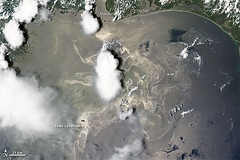
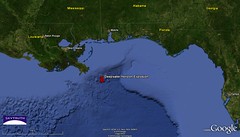
Deepwater Horizon Blowout, Gulf of Mexico - Lo...Image by SkyTruth via Flickr
Just issued this week. Some important statements, some obvious:

One that  should come as no surprise: “This disaster was preventable had existing progressive guidelines and practices been followed. This catastrophic failure appears to have resulted from multiple violations of the laws of public resource development, and its proper regulatory oversight.”

The first DHSG progress report identified seven elements responsible for this disaster:

• Improper cement design (segmented discontinuous cement sheath).

• Flawed Quality Assurance and Quality Control (QA / QC) – no cement bond logs in critical sections of the well, ineffective oversight of operations.
• Bad decision making – removing the pressure barrier – displacing the drilling mud with sea water 8,000 feet below the drill deck.
• Loss of situational awareness – early warning signs not properly detected, analyzed or corrected (repeated major gas kicks, lost drilling tools, including evidence of damaged parts of the Blowout Preventer) during drilling and/or cementing, lost circulation, changes in mud volume and drill string weight).
• Improper operating procedures – premature off-loading of the drilling mud (weight material not available at critical time).
• Flawed design and maintenance of the final lines of defense – including the Blowout Preventers (BOPs) blind shear rams, hydraulic lines, and triggering equipment – and the Emergency Shutdown and Disconnect (ESD) systems.

And more:

In the case of the Deepwater Horizon’s BOPs, the first few days following the incident are very revealing and symptomatic of BP’s failed Safety Management System (SMS). The initial response by engineers was focused on trying to fully engage the rig’s single functional blind shear ram using Remote Operated Vehicles (ROVs). However, it did not work and, in fact, the BP engineers reportedly did not even have accurate information about how the BOPs had been previously modified and wasted precious time trying to activate the BOPs.

 http://ccrm.berkeley.edu/deepwaterstudygroup.html


Enhanced by Zemanta

Monday, June 28, 2010

Why I'm not Real Happy about the potential $20B Claims Funds to be handled by Kennth Feinberg

Gulf Breeze Claims office - Gulf Breeze, FL 2Image via Flickr
There are continuing discussions about the soon to be administered $20 Billion fund from BP through Kenneth Feinberg's process: 

Feinberg plan to set a cutoff date for filing emergency claims which would be submitted at least two months after the spill finally ends. From there, expect a  formal settlement process. Claimants are not being required to sign any waivers during the emergency claims process, but might very well will have to agree not to sue BP in the future when they apply or a final settlement.    He was quoted as saying "At some point I will offer the claimant a lump sum for all future losses and giving a release that they will no longer sue BP in connection with the spill. If they don't like it they can reject the lump sum. "  

What concerns me is the continuing commentary by Feinberg - an 'impartial' administrator who has not opened claim one - that somehow lawyers want "40%" of anything. He's using that figure as a 2 by 4 in advance. I know of more than a dozen firms that are handling BP/OPA claims for free. Others are charging only 10%.

Does Feinberg expect that a person without a lawyer may conclude: 1.  If the settlement is sufficient, or
2.  What the risks are, or will they be significant if an amount is turned down, or 3.  How to determine the value of future claims?

If  a claimant does not know how to find environmental or business valuation experts,  what then?

I'm all for a discussion of what is right and wrong. I'm all for reasonable charges being discussed across the board - accountants, environmental engineers, experts on remediation, business valuation experts - all of whom have much to gain in the claims process.
Enhanced by Zemanta

Saturday, June 26, 2010

Georgians who owns a Condo or Home on the Gulf and the Oil Spill: An -Insurance Covered event?

Seagrove SunsetImage by JohnTracy via Flickr
The man made calamity that is the BP oil spill will cause extensive property damage and business interruption losses to businesses all along the Gulf Coast vacation homes and condominiums in Florida, and many types of  businesses around the Gulf.

There are also businesses away from the coastline,that might suffer business income losses. Where we go (Seagrove Beach), there is a direct financial hit being felt in towns like Defuniak Springs, Florida, as well as towns filled with hardworking folks -Florala, Flomaton, Chipley.  Gas stations like the Tom Thumb on 30-A in Seagrove seems bustling - are other service stations doing the same?

I spoke with an inn owner east of Destin who had massive losses for June, and July looked even worse.


While home and condo owners and other businesses are looking first at responsible parties to cover their losses, lawsuits against BP, Transocean and others could stretch out over a decade - or more.

So, now what? Folks should start thinking now about their own insurance coverage.

Affected business owners may want to look at their insurance policies, checking to see if  business interruption coverage is included. In our experience most business property policies have "BI".

BI coverage is designed to protect businesses from losses stemming from unavoidable interruptions in their daily operations. BI coverage may apply in a variety of circumstances, such as a forced shutdown, a downturn in business due to the damage from the oil spill, or a substantial impairment in access to products, services, or a premise.

The Business Owner's Policy (BOP) is an "off the shelf," cookie cutter policy written by the Insurance Services Office (ISO) with standard language. Most small businesses purchase BOPs.
The most important section of an insurance policy is the "Declarations" page, which defines, very specifically: Who is insured? What property is covered? In what amount is the coverage? What are the deductibles and co-pays? Are there any special exclusions or endorsements to the policy? This helps an owner figure out if he or she has the basis for a claim and provides a road map to the policy coverages. 
The "off the shelf" language usually looks like this: "We will pay for the actual loss of ‘Business Income’ you sustain due to the necessary suspension of ‘operations’ during the ‘period of restoration’… The suspension must be caused by direct physical loss or damage to property at the ‘described premises’…." In order to understand the coverage that a policy offers, you have to understand the terms used in defining the coverage.
Business Income: Business income is specifically defined in the policy as net income that would have been earned AND continuing normal operating expenses that would have been incurred. Payroll may be treated separately depending upon the policy coverage.

There may be other coverage, such as Civil Authority coverage:

  • Interruption by Civil Authority.  Losses caused by orders of city or governmental authority which prohibits access to your premises due to direct physical loss to the property are covered under some policies. There may be a time limitation of the period of indemnity of one, two or three weeks.
  There are other types of coverage which may apply to some policy holders.
  • Extra Expenses. Extra expenses are those cost that a business operator incurs as a result of a covered period to avoid or minimize his or her business income loss. These extra expenses are covered to the extent that they reduce the amount of the loss of the insured. 
  • Extended Period: Some policies provide for an extended coverage period to allow a business to return to normal operations. This period is usually limited, and is in addition to the period of restoration.


What makes sense to do right now: The list may be long, but looking at it makes sense.


  • Locate all of your insurance policies
  • Read each one -- Liability, D&O or first-party property insurance. Then, read them again
  • As you read keep in mind that that property damage, business income, contingent business income and extra expense coverage may be available under your policy - but you need to read it for yourself.
  • In some jurisdiction, an argument may be made that coverage may be available even without direct physical loss or damage
  • If you think there is coverage, it's time to consider if the next step is giving notice to all levels of coverage
  • Consider whether insurance coverage may be available under other insurance policies.


  1. Now's the time to looks over what you have - what you paid for - to see if your risk is covered. If you need help, call us.
  2. Enhanced by Zemanta

Thursday, June 24, 2010

Georgia Oil Spill Update -The BP Oil Spill $20B Fund

It's worse Than You Think - Gulf Oil Spill -  ...Image by cayobo via Flickr
Lots of questions about the $20B fund that will have $5B in it when claims begin to be analyzed later this summer: Attorney Kenneth Feinberg has been assigned the responsibilities of overseeing the $20 million fund that oil giant is likely to pay as compensation to the victims of the oil spill disaster off the gulf coast

What is an escrow fund?

The money is put into an escrow account to ensure that an amount  will handle oil spill claims. BP does not have access to the money once it has been released the US Government.

Where does the $20 billion go?

The escrow fund  will be handled by an Independent Claims Facility (ICF), designed for claims of individuals and businesses who have been harmed by the oil spill. The Fund will be used to pay claims decided by the Independent Claims Facility. Expect natural resource damage costs and state and local response costs to be pulled from the Fund.


Is the $20 billion accessible now?

Not by any stretch. BP  must pay $5 billion per year over the course of four years at a minimum. The company will make initial payments into the escrow fund of $3 billion this summer and $2 billion in the fall, followed by $1.25 billion per quarter until the $20 billion figure is reached.

Does the Fund limit BP's liability?

It does not. If paid claims are more than the commitment, BP is on the hook 


How does a claimant receive money from the fund?

No specifics yet. The claims process will be hands off for BP. Claims denials are reviewed by a three-judge panel. BP can only appeal claims exceeding $500,000.


Expect more details in July. 
Enhanced by Zemanta

Georgia and Oil Spill Claims, June 24, 2010

Emerald GrandeImage by merfam via Flickr
As folks begin to try to grasp the quagmire of a claim involving the gulf oil spill man made calamity, some quick information from various publications about making a claim:

 
Mitigation


When making a claim under the Oil Pollution Act, there is no required format for OSLTF claims. You must, however, support your claim with evidence, information, and documentation.


The Coast Guard considers that each claimant has a responsibility to make reasonable efforts to mitigate—that is, to avoid or minimize—the losses from an oil spill incident. Additional expenses related to avoiding or minimizing losses by a claimant can be included in the claim as additional expenses. The claimed amount of a direct loss will be adjusted for extra expenses and/or income related to avoidance/minimization efforts.

Know that you can make a claim for Property Damage. This means damages for injury to, or economic losses resulting from destruction of property.

You Must Provide Information Showing:

Your ownership or leasehold interest in the property

That property was injured or destroyed

Value of property both before and after injury

Cost of repair or replacement of the property

If you lost money, show:

The property was not usable because of the oil spill

The value of your property before and after the spill

Don't expect this list to change much when the $20 B fund is set up by August.

Enhanced by Zemanta

Saturday, June 19, 2010

FL Court: Commercial Fishermen Have Causes of Actions Based on Pollutants' Release

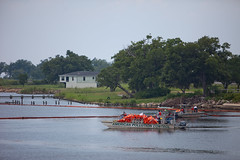
An American Pollution Control boat carries mor...Image by kk+ via Flickr
A recent Florida Supreme Court decision is especially timely given the man made catastrophe in the Gulf. The Court answered two certified questions:


    DOES FLORIDA RECOGNIZE A COMMON LAW THEORY UNDER WHICH COMMERCIAL FISHERMEN CAN RECOVER FOR ECONOMIC LOSSES PROXIMATELY CAUSED BY THE NEGLIGENT RELEASE OF POLLUTANTS DESPITE THE FACT THAT THE FISHERMEN DO NOT OWN ANY PROPERTY DAMAGED BY THE POLLUTION?

    DOES THE PRIVATE CAUSE OF ACTION RECOGNIZED IN SECTION 376.313, FLORIDA STATUTES (2004), PERMIT COMMERCIAL FISHERMEN TO RECOVER DAMAGES FOR THEIR LOSS OF INCOME DESPITE THE FACT THAT THE FISHERMEN DO NOT OWN ANY PROPERTY DAMAGED BY THE POLLUTION?    

As to the first question, here's what the Court held:

"The Legislature has enacted a far-reaching statutory scheme aimed at remedying, preventing, and removing the discharge of pollutants from Florida‟s waters and lands. To effectuate these purposes, the Legislature has provided for private causes of action to any person who can demonstrate damages as defined under the statute. There is nothing in these statutory provisions that would prevent commercial fishermen from bringing an action pursuant to chapter 376."

The Court wrote as to the second question:

'We have plaintiffs who have brought traditional negligence and strict liability claims against a defendant who has polluted Tampa Bay and allegedly caused them injury. Thus, the economic loss rule does not prevent the plaintiffs from bringing this cause.'

The Court went on:

We conclude, as did many of the courts in the cases discussed above, that the defendant owed a duty of care to the commercial fishermen, and that the commercial fishermen have a cause of action sounding in negligence.

In the present case, the duty owed by Mosaic arose out of the nature of Mosaic‟s business and the special interest of the commercial fisherman in the use of the public waters. First, Mosaic‟s activities created an appreciable zone of risk within which Mosaic was obligated to protect those who were exposed to harm.

Mosaic's business involved the storage of pollutants and hazardous contaminants. It was forseeable that, were these materials released into the public waters, they would cause damage to marine and plant life as well as to human activity.

Here, the discharge of the pollutants constituted a tortious invasion that interfered with the special interest of the commercial fishermen to use those public waters to earn their livelihood. We find this breach of duty has given rise to a cause of action sounding in negligence. We note, however, that in order to be entitled to compensation for any loss of profits, the commercial fishermen must prove all of the elements of their causes of action, including damages.

Find the opinion here. http://www.floridasupremecourt.org/decisions/2010/sc08-1920.pdf 

Enhanced by Zemanta

Wednesday, June 02, 2010

Questions and Answers about an Oil Spill Claim

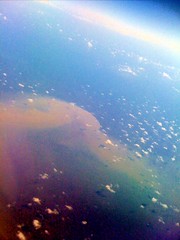
BP Gulf Oil Spill, 5.20.2010, @40,000 feet.Image by zphone via Flickr

We've been answering questions by phone and email about what to do and how to make a claim regarding the Oil Spill:

Question: What legal options are available to individuals or businesses that are damaged by the oil spill in the Gulf of Mexico?

Answer: There are two main avenues to recover monetary damages: through traditional state-law causes of action, such as negligence; and through the federal Oil Pollution Act of 1990 (“OPA”). Generally, unless oil physically makes contact with you or property, federal law limits claims for economic damages and requires them to be filed under OPA.

Question: What kind of claims can be made pursuant to OPA?

Answer: Under OPA, claims may be filed for a broad spectrum of economic damages, including lost profits and earning capacity, oil cleanup costs, and damage to property.

Question: What do I have to do to file an OPA claim?

Answer: The filing of an OPA claim is a multi-step process. Prior to filing suit under OPA, the claimant must comply with certain procedural requirements. The claimant must first present his/her/its claim to the responsible party as designated by the federal government, BP in this situation. The responsible party then has ninety (90) days to process the claim and either settle the claim or deny it. If there no settlement by the conclusion of the 90 days, then the claimant has the option to file a lawsuit or to file a claim with the Oil Spill Liability Trust Fund.

Question
If I make a claim pursuant to OPA, does that mean that I am going to receive the full amount of the damages claimed?

Answer
The existence of the OPA does not guarantee that any person can be compensated for all economic losses. There are important risks inherent in the OPA scheme that may prevent a full recovery. Some of these include:

• The value of the claim is initially evaluated by the responsible party, which may undervalue the claim or deny it entirely. BP has promised to pay “legitimate” claims but has not yet given guidelines for what that means. If a lawsuit must be filed, there is a risk that a court would not agree with the valuation and the lawsuit could be partially or completely lost.
• It may take a very long time to resolve the claim, particularly if a lawsuit must be filed and protracted litigation begins. Some claimants are still awaiting full payment from the Exxon Valdez disaster in 1989.
• There is a risk that BP or other responsible parties will run out of money to pay claims, enter bankruptcy, or otherwise be unable to satisfy all damages. If litigation is needed, this risk increases.
• There is a cap on each responsible party’s total liability pursuant to OPA. For BP, the cap is $75 million plus clean-up costs, and there is an as-yet undetermined amount for other parties. These limits apply to the total value of all claims to be paid out by the responsible parties, meaning that, for example, BP’s $75 million might be divided up among all claimants in the Gulf of Mexico (or might be fully disbursed before claims can be filed).

Fortunately, the cap can be lifted if gross negligence or a violation of an applicable federal regulation can be shown. Also, although this has not yet been confirmed in writing, BP has indicated that it will not assert the cap as a defense to paying its full share of damages. However, these statements are not binding.

• All lawsuits must be filed within three (3) years of the incident.

Question
Is OPA the only basis for recovery of damages caused by the oil spill?

Answer
In the event that oil comes into contact with property, state-law causes of action may assist in recovering damages. These causes of action could apply in addition to damages provided under OPA. Consequently, in addition to the remedies provided under OPA, there may be other ways to recover.

This is a just an overview. Please, use common sense and talk to a lawyer if you feel like one would be able to help.


Reblog this post [with Zemanta]

BP pays out $3 million to Floridians who lost business to spill

From the SPT:

As of Friday, BP had paid out more than $3 million in claims to nearly 4,000 Floridians. BP spokesman Ray Dempsey said the company hasn't turned anyone down so far.

Still, some Floridians say BP has done about as good a job at helping them cope with their financial losses as it has in stopping the oil from flowing.

"On the news, they're talking about how much they're doing for everybody, but they haven't done nothing for us," said Bill McCullers, who owns three commercial fishing boats in Madeira Beach.

Some fishermen say they haven't been able to get anything but a runaround out of BP. Others say they were handed a check for $2,500 or $5,000, but that's not much compared with their expenses.

"That's the expense of going on one fishing trip," said Bob Spaeth, who owns six commercial fishing boats and Madeira Beach Seafood.

Both Florida Chief Financial Officer Alex Sink, a Democrat, and Attorney General Bill McCollum, a Republican, have criticized BP's claims process.

"They're up in the Panhandle issuing checks of $1,000 and $2,000, and you've got charter fishing operations that are experiencing losses of $10,000," Sink said.

No government agency is looking over BP's shoulder, either. Under the law, the U.S. Coast Guard is supposed to review how the company sets up its payment of claims but does not see any of the claims that are filed, a Coast Guard spokesman said.

Source here.