Showing posts sorted by date for query total body. Sort by relevance Show all posts

Sunday, January 26, 2014

Update on Emergency Department Visits Involving Energy Drinks: A Continuing Public Health Concern

From the DAWN Report/Network:

Energy drinks are flavored beverages containing high amounts of caffeine and typically other additives, such as vitamins, taurine, herbal supplements, creatine, sugars, and guarana, a plant product containing concentrated caffeine. These drinks are sold in cans and bottles and are readily available in grocery stores, vending machines, convenience stores, and bars and other venues where alcohol is sold. These beverages provide high doses of caffeine that stimulate the central nervous system and cardiovascular system. The total amount of caffeine in a can or bottle of an energy drink varies from about 80 to more than 500 milligrams (mg), compared with about 100 mg in a 5-ounce cup of coffee or 50 mg in a 12-ounce cola.1 Research suggests that certain additives may compound the stimulant effects of caffeine. Some types of energy drinks may also contain alcohol, producing a hazardous combination; however, this report focuses only on the dangerous effects of energy drinks that do not have alcohol.

Although consumed by a range of age groups, energy drinks were originally marketed to appeal to youths and were reported to have been consumed by 30 to 50 percent of children, adolescents, and young adults.2 Marketing suggests benefits such as increased energy and stamina, weight loss, and enhanced physical and mental performance.2 More concentrated forms of energy drinks, known as energy shots, have become increasingly popular among a wider range of age groups, including older adults.3 Marketing analysts reported increasing sales of energy shots in 2011 that were expected to continue through 2012.3 The concentrated amount of caffeine and other ingredients in these drinks has come under scrutiny as the Food and Drug Administration disclosed reports of adverse events with mention of the popular energy shot 5-Hour Energy.4

Consumption of energy drinks is a rising public health problem because medical and behavioral consequences can result from excessive caffeine intake. A growing body of scientific evidence documents harmful health effects of energy drinks, particularly for children, adolescents, and young adults.2 Research has established that, among college students, there are associations between energy drink consumption and problematic behaviors such as marijuana use, sexual risk taking, fighting, smoking, drinking, and prescription drug misuse.5,6 In one study, bar patrons who consumed alcohol mixed with energy drinks were 3 times more likely to leave a bar highly intoxicated and were 4 times more likely to intend to drive while intoxicated than those who did not consume alcohol mixed with energy drinks.6 This latter finding may be because the high levels of caffeine found in energy drinks can mask the symptoms associated with being intoxicated (e.g., feeling lethargic). Individuals, especially young drinkers, may incorrectly believe that consumption of caffeine can "undo" the effects of alcohol intake and make it safe to drive after drinking. Because of the popularity of energy drinks and the burgeoning literature suggesting the risks involved with their use, gaining additional information about these beverages is important.

The Drug Abuse Warning Network (DAWN) is a public health surveillance system that monitors drug-related emergency department (ED) visits in the United States and can be used as a source of information for assessing the more negative medical consequences associated with consuming energy drinks. To be a DAWN case, the ED visit must involve a drug, either as the direct cause of the visit or as a contributing factor. Such a visit is referred to as a "drug-related visit." Drugs include alcohol; illegal drugs, such as cocaine, heroin, and marijuana; pharmaceuticals (e.g., over-the-counter medicines and prescription medications); and nutraceuticals, such as nutritional supplements, vitamins, and caffeine products. A previous report addressing ED visits involving energy drinks was published using 2009 data7; this issue of The DAWN Report highlights trend data for energy drinks from 2007 to 2011, as well as drug combinations found in 2011.

http://www.samhsa.gov/data/2k13/DAWN126/sr126-energy-drinks-use.htm

Thursday, March 28, 2013

FDA scolds company for Facebook Liking unapproved product claim

From Geek.com:

AMARC Enterprises, a supplement maker, advertises the benefits of its product — a drug called Poly-MVA — through using supposed customer claims about it. The item isn’t approved by the FDA, so the company most likely thought this method was a clever way to advertise the product without having to present any sort of actual evidence as to its claims. This didn’t please the FDA, which sent a warning letter to AMARC, stating that since Poly-MVA isn’t FDA-approved, the customer testimonials essentially falsify the product as approved.


Here's the letter:


Amarc Enterprises 12/11/12

Department of Health and Human Services logoDepartment of Health and Human Services
Public Health Service
Food and Drug Administration
Los Angeles District
19701 Fairchild
Irvine, California 92612-2506
Telephone (949) 608-2900
Fax            (949) 608-4415 

WARNING LETTER
VIA UNITED PARCEL SERVICE
SIGNATURE REQUIRED                                                           
December 11, 2012
                                                                                                                                                     WL  11-13
AMARC Enterprises, Inc.
Attn: Albert Sanchez, CEO
1339 Broadway
El Cajon, CA 92021
Dear Mr. Sanchez:
                                                                             
This letter concerns your firm’s marketing of the products, Poly-MVA and Poly-MVA for Pets. The U.S. Food and Drug Administration (FDA) reviewed your websites, www.polymva.com and www.polymva.net, as well as literature included in the information packet which accompanied the sale and shipment of your product, “Poly MVA” on November 15 and has determined that “Poly MVA” is promoted for conditions that cause the product to be a drug under section 201(g)(1)(B) of the Federal Food, Drug, and Cosmetic Act (the Act) [21 U.S.C. § 321(g)(1)(B)]. The claims in the literature and on your websites establish that this product is a drug because it is intended for use in the cure, mitigation, treatment, or prevention of disease. The marketing of your product with these claims violates the Act. 
In addition, we reviewed your websites at www.polymva4pets.com and www.polymvaforpets.com where you promote and sell your “Poly-MVA for Pets” veterinary product. We have determined that Poly-MVA for Pets is intended for use in the cure, mitigation, treatment, or prevention of disease in animals, or to affect the structure or function of the body of animals, which makes it a drug under section 201(g)(1) of the Act. [21 U.S.C. § 321(g)(1)]. Further, as discussed below, this product is an unapproved new animal drug as defined by the Act and your marketing of it therefore violates the law.  
Examples of claims in the form of testimonials, on your websites, www.polymva.com and www.polymva.net, on the webpage titled, “Customer Experiences” include:
  • “I want everyone to know that I am now 3 years clear of lung cancer!! When I was told I had a mass in my lung, the first thing I did when I returned home was to call AMARC Enterprises – the PolyMVA people. PolyMVA helped save my life. I began a regimen of PolyMVA…After 3 months, the Stage 2 cancer was down to Stage 1. And here I am, 3 years later…the PET Scan is as clear as a bell. Thank you again and again for the support that PolyMVA gave my body in my fight against cancer!”

  • “...I said “No” Chemotherapy!...I became quite ill and was diagnosed with stage 3 ovarian cancer…I had surgery to remove a very large tumor and was scheduled to begin an aggressive chemotherapy regimen as the cancer had spread. Even with chemotherapy I was aware that the prognosis was not encouraging…One of the supplements that my naturopath highly recommended was Poly MVA…In my opinion anyone in my situation involving cancer could be greatly improved by using Poly MVA…”
Examples of claims also appear in the information packet, which was purchased from your website, www.polymva.com, and accompanied the shipment of your product, “Poly MVA.” Included in the packet is a book titled, “Poly-MVA A New Supplement in the Fight Against Cancer” with the following claims:
In Chapter 6 which is titled, “Palladium Lipoic Complex: Research Evidence”
On page 23:
  • “[An] [o]ncological surgeon…administered Palladium Lipoic Complex intravenously to ninety-five patients. The cancers from which these patients suffered included cancers of the breast, lung, colon rectum, prostate, pancreas, ovary, skin (malignant melanoma), and brain. Ninety percent of the patients had failed to improve after undergoing virtually all available therapy. During their experimental treatment with Palladium Lipoic Complex, they received moderate doses of chemotherapy. Under normal circumstances, 20 to 60 percent of patients would only survive an average of another six months. However, nine months after initiation of intravenous Palladium Lipoic Complex, 90 percent of them were still alive.”
In Chapter 7 titled, “True Stories of Cancer Survival with Palladium Lipoic Complex” are numerous testimonials, including the following:
On pages 32-33:
  • “[A] forty-two-year-old breast cancer survivor discovered Palladium Lipoic Complex very shortly after her breast cancer diagnosis…At the time of her surgery, she had been taking Palladium Lipoic Complex for fifteen days, and a preoperative ultrasound showed that her tumor had shrunk.”
On page 41:
  • “Today, Daniel’s tumor is inactive due to necrosis. There has been “no growth” since he began taking PdLA. The post-radiation side effects are more manageable because of this supplement.”
On Page 44 under the heading, “Case Study 4: Multiple Myeloma”:
  • “An Alaskan woman diagnosed with multiple myeloma sent a letter to the makers of Palladium Lipoic Complex. She had received her diagnosis…and after taking Palladium Lipoic Complex for a little over two years, she was told that her blood tests and exams showed “no measurable signs of multiple myeloma carcinoma” and that she was “in total remission.””
On Pages 45-46, under the heading, “MANY MORE SUCCESS STORIES”:
  • “A thirty-month outcome-based investigation by Dr. James W. Forsythe, lends further support for Palladium Lipoic Complex in the treatment of late-stage cancer…In this study, the greatest impact of Palladium Lipoic Complex was seen in cancers of the breast, lung, and prostate…As you have read, Palladium Lipoic Complex has powerful, remarkable results for many types of cancer patients.”
In Chapter 8 which is titled, “Using Palladium Lipoic Complex for Nutritional Support and Protection”
On pages 47-48:
  • “In a time when one out of three people can expect to have cancer at some point, it make sense to improve your odds every way you can and Palladium Lipoic Complex…would be an excellent way to do so.”
  • “Free-radical accumulation with inadequate antioxidant protection is implied in the causes and effects of many other diseases, including diabetes, Alzheimer’s dementia, heart disease, stroke and arthritis. Palladium Lipoic Complex is a superior antioxidant that could help to prevent these diseases as well.”
On page 48, under the heading, “PDLA FOR PROTECTION AGAINST STROKE-INDUCED BRAIN DAMAGE”:
  • “When Palladium Lipoic Complex is administered immediately following a global ischemic insult, apoptic death is reduced by 70 percent.”
On page 49 under the heading, “PALLADIUM LIPOIC COMPLEX AND AUTOMIMMUNE DISEASES”:
  • “Practitioners who use Palladium Lipoic Complex have found that both oral and topical versions are effective for the treatment of psoriasis – even the most severe cases.”
On page 49 under the heading, “PALLADIUM LIPOIC COMPLEX AND ENDOMETRIOSIS”:
  • “Palladium Lipoic Complex offers a remarkably effective alternative treatment for endometriosis.”
On page 53 titled, “Conclusion”:
  • “PdLA compounds were specifically designed to support healthy cells with the goal of selectively destroying abnormal cells without harming noncancerous cells. The manner in which Palladium Lipoic Complex does so has yet to be completely explained, but the research and the success stories from cancer patients are compelling enough – and the substances nontoxic enough – to merit its use by anyone who wishes to reverse or prevent cancer.”
The information packet also included a document titled, “Testimonials” which contains the following claims:
  • “I would recommend Poly-MVA for anyone wanting to be more healthy…especially if your systems are compromised…due to cancer.”
  • “I received the news of my recurrent brain tumor with dread and shock. My father…sent me my first bottle of Poly-MVA. I took it immediately along with the conventional treatments. Since then, I have had clean MRI scans and I consider Poly-MVA…to be the cornerstones of my recovery.”
  • “I was diagnosed with uterine cancer (carcino sarcoma)…I had radical surgery and there was the possibility that it may have metasticized [sic] into the upper abdomen. I was introduced to this product…before I was scheduled for chemotherapy…I never had nausea or vomiting. I had increased energy and a hearty appetite. My…Gyn Oncologist…was so amazed at my rapid recovery…During cold and flu season I was not affected. My blood cells were normal…I did receive a miracle and I know that God has given you the formula for helping people with life threatening diseases…I had recovered so well and so fast that I did not need to complete the radiation and chemotherapy treatments that were supposed to last for six more months…”
We also noted the following claims on your firm’s website, www.polymvaforpets.com that show the intended uses of Poly-MVA for Pets:
On the webpages titled, “Tumors in Cats”, “Leukemia in Cats”, “Lymphoma in Cats”, “Symptoms of Cancer in Dogs”, “Osteosarcoma in Dogs”, “Sarcomas in Dogs”, and “Cancer in Dogs”:
  • “Poly-MVA for Pets is a unique and patented nutriceutical form of nutritional support for animals, clinically shown to be effective by numerous veterinarians and pet owners alike for animals undergoing cancer therapy. The unique nature of Poly-MVA for Pets makes it safe, effective and well-suited for your pet, so your beloved companion will feel better and experience a greater quality of life.”
On the webpage titled, “About Poly-MVA for Pets”:
  • “Poly MVA for Pets is perfect for animals facing all types of health, nutrition or energy challenges. Furthermore, if your pet is dealing with a difficult illness, or an associated treatment such as chemotherapy or radiation therapy, Poly-MVA for Pets may be just what you’re looking for.”

  • “Notable with the cancer research is the fact that a majority of the most common canine cancers have seen positive results when PdLA is a part of an integrative protocol:”

  • “The largest clinical integrative cancer investigation of PdLA was a veterinary oncology program with over 900 dogs enrolled. Patients received the PdLA supplement as part of their chemotherapy radiation and/or surgical protocol. The PdLA seemed most effective in the cases of solid tumors (i.e. soft tissue sarcoma, hemangiosarcoma, mast cell, transition cell carcinoma, lung, anal sac carcinoma, renal carcinoma, squamous cell carcinoma, fibrosarcoma, melanoma, menigioma [sic],neuroblastoma, mammary adenocarcinoma). Some of the most effective findings were apparent in the osteosarcoma patients. (Notable is that the cause/origin of osteosarcoma in large dogs is considered identical to the disease progression in human children.) In this study, integrative PdLA support (PdLA + amputation) improved the animals' median survival time 62% (103 days more) compared to surgery alone. When the PdLA supplement was added to the chemotherapeutic regimen, the dogs exhibited a 27% longer median survival (79 days more).”

  • “A leading veterinary oncologist used PdLA in his practice and concluded that following PdLA complementary support, chemotherapeutic animals demonstrated improvements in various objective parameters (i.e. weight, anemia, liver and kidney function).”
On the webpage titled, “Pet Nutrition”:
  • “Whether your pet is an older pet, is facing a serious illness and/or harsh treatment. . . Poly-MVA for Pets offers nutritional support that can ensure that your animal companion maintains a full, active and enjoyable life.”
On the webpage titled, “Find a Vet”:
  • “Many veterinarians across the country are utilizing Poly-MVA for Pets in their protocols for overall pet health and well-being, and when dealing with degenerative disease.”
On the webpage titled, “Customer Experiences” you include claims in the form of testimonials which establish the intended use of your product, “Poly-MVA for Pets” as a drug. Several examples of these claims include, but are not limited to, the following:
  • “I started my chow on Poly-MVA for Pets right away, along with other nutrients, to help her immune system keep her melanoma at bay. That was years ago, and she is still full of life and still bringing joy to our lives!”
  • “My 10-year-old chocolate lab. . . was diagnosed with liver cancer. . . I was told she had a month to live. . . . the vet. . . did say “you might want to try Poly-MVA for Pets for support”. . . . now. . . [my dog] is eating again and still taking her 2.1 mile walks a day!”
We also note claims made on your Facebook account accessible at: https://www.facebook.com/poly.mva, which includes a link to your website at www.polymva.com. The following are examples of the claims:
            In a March 10, 2011 post which was “liked” by “Poly Mva”:
  •  “PolyMVA has done wonders for me. I take it intravenously 2x a week and it has helped me tremendously. It enabled me to keep cancer at bay without the use of chemo and radiation…Thank you AMARC”
In a May 5, 2010 post you provide a link to the blog post titled, “Children with Cancer Often Use Alternative Approaches” which can be found on your website at www.polymva.com/blog-news/218/children-with-cancer-often-use-alternative-approaches. At the end of the post is the following statement and a link to the website, www.facr.org:
  • “For information on how palladium lipoic complexes can nutritionally support the body during cancer and cancer therapy, visit the Foundation for Advancement in Cancer Research’s website.”
Your products are not generally recognized as safe and effective for the above referenced conditions and therefore, these products are also “new drugs” under section 201(p) of the Act [21 U.S.C. § 321(p)]. New drugs may not be legally marketed in the U.S. without prior approval from FDA as described in section 505(a) of the Act [21 U.S.C. § 355(a)]. FDA approves a new drug on the basis of scientific data submitted by a drug sponsor to demonstrate that the drug is safe and effective.
Furthermore, your products are offered for conditions that are not amenable to self-diagnosis and treatment by individuals who are not medical practitioners; therefore, adequate directions for use cannot be written so that a layperson can use this drug safely for its intended uses. Thus, your products are misbranded within the meaning of section 502(f)(1) of the Act [21 U.S.C. § 352(f)(1)], in that the labeling fails to bear adequate directions for use. The introduction of misbranded drugs into interstate commerce is a violation of section 301(a) of the Act [21 U.S.C. § 331(a)].
Further, Poly-MVA for Pets is considered a “new animal drug” under section 201(v) of the Act [21 U.S.C. § 321(v)] because it is not generally recognized, among experts qualified by scientific training and experience to evaluate the safety and effectiveness of animal drugs, as safe and effective for use under the conditions prescribed, recommended, or suggested in the labeling.
To be legally marketed, a new animal drug must have an approved new animal drug application, conditionally approved new animal drug application, or index listing under sections 512, 571, and 572 of the Act [21 U.S.C. §§ 360b, 360ccc, and 360ccc-l]. Poly-MVA for Pets is not approved or index-listed by the FDA, and therefore the product is considered unsafe under section 512(a) of the Act [21 U.S.C. § 360b(a)] and adulterated under section 501(a)(5) of the Act. [21 U.S.C. § 351(a)(5)].   The introduction of adulterated drugs into interstate commerce is prohibited under section 301(a) of the Act [21 U.S.C. § 331(a)].
The above violations are not meant to be an all-inclusive list of violations in your products and their labeling. It is your responsibility to ensure that all of your products and labeling are in compliance with the Act and its implementing regulations. You should take prompt action to correct the violations. Failure to promptly correct these violations may result in regulatory action without further notice, such as seizure and/or injunction. 
Please notify this office in writing within fifteen (15) working days from your receipt of this letter as to the specific steps you have taken to correct the violations noted above and to assure that similar violations do not occur. Your response should include any documentation necessary to show that correction has been achieved. If you cannot complete all corrections before you respond, please explain the reason for the delay and state the date by which the corrections will be completed.
          

Tuesday, March 26, 2013

March 26 , 2013: Omontys Recall - Background

Almost a year ago, Omontys was approved by the FDA.


The U.S. Food and Drug Administration today approved Omontys (peginesatide) to treat anemia, a condition in which the body does not have enough healthy red blood cells, in adult dialysis patients who have chronic kidney disease (CKD).
http://www.fda.gov/NewsEvents/Newsroom/PressAnnouncements/ucm297464.htm

What is anemia? From the NIH:
Anemia is a condition in which your blood has a lower than normal number of red blood cells.

Anemia also can occur if your red blood cells don't contain enough hemoglobin (HEE-muh-glow-bin). Hemoglobin is an iron-rich protein that gives blood its red color. This protein helps red blood cells carry oxygen from the lungs to the rest of the body.
If you have anemia, your body doesn't get enough oxygen-rich blood. As a result, you may feel tired or weak. You also may have other symptoms, such as shortness of breath, dizziness, or headaches.
Severe or long-lasting anemia can damage your heart, brain, and other organs in your body. Very severe anemia may even cause death.

Overview

Blood is made up of many parts, including red blood cells, white blood cells, platelets (PLATE-lets), and plasma (the fluid portion of blood).

Red blood cells are disc-shaped and look like doughnuts without holes in the center. They carry oxygen and remove carbon dioxide (a waste product) from your body. These cells are made in the bone marrow—a sponge-like tissue inside the bones.

White blood cells and platelets (PLATE-lets) also are made in the bone marrow. White blood cells help fight infection. Platelets stick together to seal small cuts or breaks on the blood vessel walls and stop bleeding. With some types of anemia, you may have low numbers of all three types of blood cells.
Anemia has three main causes: blood loss, lack of red blood cell production, or high rates of red blood cell destruction. These causes might be the result of diseases, conditions, or other factors.

http://www.nhlbi.nih.gov/health/health-topics/topics/anemia/

Continuing with the 2012 FDA report:
Omontys is a new erythropoiesis-stimulating agent (ESA) that aids in the formation of red blood cells. It works by stimulating the bone marrow to produce more red blood cells, usually measured as hemoglobin levels, to reduce the need for transfusions in patients with CKD. Omontys is administered as a once-a-month injection.

“Omontys represents the first new FDA-approved and marketed ESA for this condition since 2001,” said Richard Pazdur, M.D., director of the Office of Hematology and Oncology Products in the FDA’s Center for Drug Evaluation and Research. “This new drug offers patients and health care providers the convenience of receiving ESA therapy just once per month instead of more frequent injections.”
Two randomized, active-controlled, open-label, multi-center clinical trials demonstrated the safety and efficacy of Omontys in patients with CKD who were on dialysis. The trials randomly selected a total of 1,608 patients with hemoglobin levels initially stabilized by ESA to receive either Omontys once monthly or to continue their current ESA (epoetin) treatment. Results showed Omontys was as safe and effective as epoetin in maintaining hemoglobin levels within the studies’ pre-specified range of 10 to 12 grams per deciliter.
The most common side effects observed in 10 percent or more of dialysis patients treated with Omontys were diarrhea, vomiting, high blood pressure (hypertension) and joint, back, leg or arm pain (arthralgia).
Omontys should not be used in patients with CKD who are not receiving dialysis or in patients with cancer–related anemia, according to the FDA-approved labeling. It also should not be used as a substitute for red blood cell transfusions in patients who require immediate correction of anemia. Omontys has not been shown to improve symptoms of anemia, physical functioning or health-related quality of life in patients with CKD on dialysis.
The FDA approved Omontys with a Risk Evaluation and Mitigation Strategy (REMS), which added safety measures consisting of educational elements for health care professionals and a requirement to assess drug use data.

Now fast forward to 2013, with the recall of this product. 
 Affymax, Inc. and Takeda Pharmaceutical Company Limited along with the U.S. Food and Drug Administration (FDA) are informing the public of a voluntary recall of all lots of OMONTYS® (peginesatide) Injection to the user level as a result of new postmarketing reports regarding serious hypersensitivity reactions, including anaphylaxis, which can be life-threatening or fatal.
To date, fatal reactions have been reported in approximately 0.02% of patients following the first dose of intravenous administration. The reported serious hypersensitivity reactions have occurred within 30 minutes after such administration of Omontys. There have been no reports of such reactions following subsequent dosing, or in patients who have completed their dialysis session. Since launch, more than 25,000 patients have received Omontys in the postmarketing setting.  The rate of overall hypersensitivity reactions reported is approximately 0.2% with approximately a third of these being serious in nature including anaphylaxis requiring prompt medical intervention and in some cases hospitalization.
BACKGROUND: Omontys (peginesatide) Injection is indicated for the treatment of anemia due to chronic kidney disease in adult patients on dialysis and is packaged in 10 mg and 20 mg Multi-dose vials:
  • 10mg Multi-dose Vials - NDC 64764-610-10  Lots C18685, C18881, C19258
  • 20mg Multi-dose vials - NDC 64764-620-20  Lots C18686, C18696

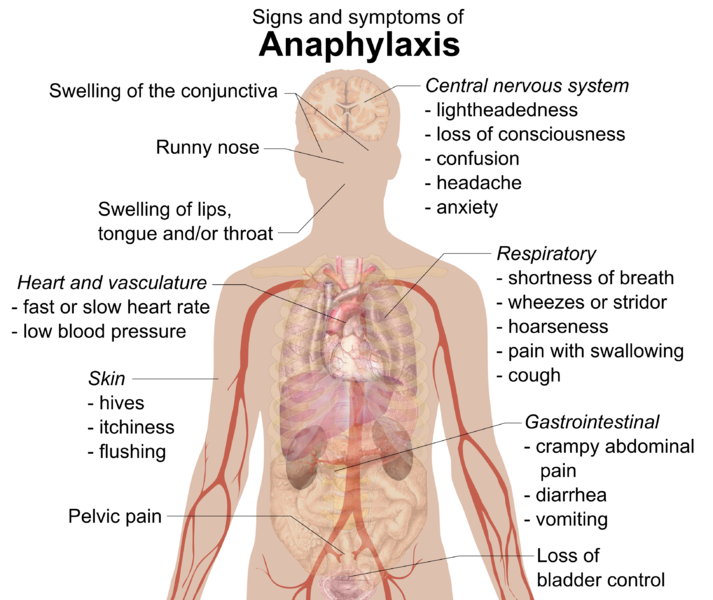
What is anaphylaxis? 

File:Signs and symptoms of anaphylaxis.png

Anaphylaxis is a serious allergic reaction that is rapid in onset and may cause death. It typically causes a number of symptoms including an itchy rash, throat swelling, and lowblood pressure. Common causes include insect bites/stings, foods, and medications.
On a pathophysiologic level, anaphylaxis is caused by the release of mediators from certain types of white blood cells triggered either by immunologic or non-immunologic mechanisms. It is diagnosed based on the presenting symptoms and signs. The primary treatment is injection of epinephrine, with other measures being complementary.

http://en.wikipedia.org/wiki/Anaphylaxis

Wednesday, May 02, 2012

May 2, 2012 DMAA Product List

We've been investigating products regarding DMAA for some time now, and with news this past week from the FDA about warnings over DMAA, have compiled this list of products:

Distributor/Manufacturer        Product

Total Body Nutrition                1,3 D Bomb 1,3 D Nox

CTD Labs                                  Adralin

Serious Nutrition Solutions     Adrena-G

United Health                           Avidex

These are in addition to those noted by the FDA


 Exclusive SupplementsBiorhythm SSIN Juice
 Fahrenheit NutritionLean Efx
 Gaspari NutritionSpirodex
 iSatori Global Technologies, LLCPWR
 Muscle Warfare, Inc.Napalm
 MuscleMeds Performance TechnologiesCode Red
 Nutrex ResearchHemo Rage Black
Lipo-6 Black Ultra Concentrate
Lipo-6 Black
Lipo-6 Black Hers Ultra Concentrate
Lipo-6 Black Hers 
 SEI PharmaceuticalsMethylHex 4,2 
 SNI LLCNitric Blast
 USP Labs, LLCOxy Elite Pro
Jack3D 


Enhanced by Zemanta

Tuesday, April 10, 2012

FDA Sends Warning Letter to California Orthopedic & Spine Device Company


The FDA recently conducted an inspection of a company in California, Orthopedic Alliance, and the inspection results are posted on the FDA site. The company was found to not be  in conformity with the "current good manufacturing practice requirements of the Quality System regulation." The violations included failure to establish and maintain procedures for implementing corrective and preventative actions and failure to establish and maintain procedures for control and distribution of the finished devices.

Here's an excerpt of the letter:

During an inspection of your firm located in Murrieta, California, on July 20, 2011, through September 23, 2011, investigators from the United States Food and Drug Administration (FDA) determined that your firm manufactures various orthopedic implant devices, including the SC Total Hip System and the SC Ceramic Ball Heads. Under Section 201(h) of the Federal Food, Drug, and Cosmetic Act (the Act), 21 U.S.C. § 321(h), these products are devices because they are intended for use in the diagnosis of disease or other conditions or in the cure, mitigation, treatment, or prevention of disease, or they are intended to affect the structure or function of the body.

This inspection revealed that these devices are adulterated within the meaning of Section 501(h) of the Act (21 U.S.C. § 351(h)), in that the methods used in, or the facilities or controls used for, their manufacture, packing, storage, or installation are not in conformity with the current good manufacturing practice requirements of the Quality System regulation found at Title 21, Code of Federal Regulations (CFR), Part 820. We received a response from Mr. Arnold Neves, Jr., dated September 30, 2011, concerning our investigator's observations noted on the Form FDA 483, List of Inspectional Observations, that was issued to your firm. We address this response below, in relation to each of the noted violations. These violations include, but are not limited to, the following:

1. Failure to establish and maintain procedures for implementing corrective and preventive action (CAPA), as required by 21 CFR 820.100(a).
 
For example, your firm's General Counsel Representative stated that there was no corrective and preventive action procedure.

We reviewed your firm's response and conclude that it is not adequate. Your firm stated that two of its employees will be attending a CAPA workshop in early October, 2011, and that the CAPA procedure will be implemented in sixty days. However, neither procedures nor additional procedural details have been submitted for our review. In addition, your firm did not provide a rationale for requiring up to sixty days to complete this corrective action.

2. Failure to establish and maintain procedures for receiving, reviewing, and evaluating complaints by a formally-designated unit, as required by 21 CFR 820.198(a).


http://www.fda.gov/ICECI/EnforcementActions/WarningLetters/2012/ucm297260.htm

Thursday, March 15, 2012

March 2012 Pradaxa News for GA and FL


Pradaxa Use

Pradaxa is a blood thinning agent (anticoagulant) that is prescribed to reduce the risk of stroke in patients with non-valvular atrial fibrillation. Pradaxa is manufactured by Boehringer Ingelheim. The U.S. Food and Drug Administration, FDA, approved Pradaxa on October 19, 2010.

FDA Safety Communication Regarding Pradaxa Serious Bleeding Events

In a Safety Communication dated December 7, 2011, the FDA stated that it is currently evaluating post-marketing reports of serious bleeding events in patients taking Pradaxa (dabigatran etexilate mesylate). While bleeding is a known complication of blood thinning medications, the FDA wishes to determine if life threatening bleeding complications occur more commonly with Pradaxa than would be expected.
Because Pradaxa is prescribed to reduce the risk of blood clot formation the FDA advised that patients should not stop taking Pradaxa without talking to their healthcare professional first. The FDA also advised that patients should call their healthcare professional and seek immediate care if they develop any signs or symptoms of bleeding such as:
  • Unusual bleeding from the gums
  • Nose bleeding that happens often
  • Menstrual or vaginal bleeding that is heavier than normal
  • Bleeding that is severe or that you cannot control
  • Pink or brown urine
  • Red or black stools (looks like tar)
  • Bruises that happen without a known cause or that get larger
  • Coughing up blood or blood clots
  • Vomiting blood or vomit that looks like coffee grounds
In addition to the FDA’s efforts, Pradaxa is being monitored for an increased risk of serious or irreversible bleeding by drug regulatory agencies worldwide. According to the European Medicines Agency as of November 6, 2011, a worldwide total of 256 spontaneous case report of serious bleeding resulting in death were recorded in association with the use of Pradaxa.

Pradaxa Bleeding Risks and Irreversible Bleeding

In January of 2012 the FDA posted on its website revised product labeling for Pradaxa.  The revised label indicates that at this time, there is no specific agent or medication that will reverse a Pradaxa bleeding event.  Instead, the patient’s body must eliminate Pradaxa via the renal (kidney) system.  Further complicating this matter is that Pradaxa’s anticoagulant (blood thinning) activity and half-life are increased in patients with kidney impairment.

The FDA site has this information:

The U.S. Food and Drug Administration (FDA) is evaluating post-marketing reports of serious bleeding events in patients taking Pradaxa (dabigatran etexilate mesylate). Pradaxa is a blood thinning (anticoagulant) medication used to reduce the risk of stroke in patients with non-valvular atrial fibrillation (AF), the most common type of heart rhythm abnormality.
Facts about Pradaxa
(dabigatran etexilate mesylate)
  • A blood thinner (anticoagulant) known as a direct thrombin inhibitor.
  • Approved to reduce the risk of stroke and blood clots (systemic embolism) in patients with non-valvular atrial fibrillation.
  • Available as 75 mg and 150 mg oral capsules.
  • From approval in October 2010 through August 2011, a total of approximately 1.1 million Pradaxa prescriptions were dispensed and approximately 371,000 patients received Pradaxa prescriptions from U.S. outpatient retail pharmacies.1
At this time, FDA continues to believe that Pradaxa provides an important health benefit when used as directed and recommends that healthcare professionals who prescribe Pradaxa follow the recommendations in the approved drug label (SeeAdditional Information for Healthcare Professionals).  
Patients with AF should not stop taking Pradaxa without talking to their healthcare professional. Stopping use of blood thinning medications can increase their risk of stroke. Strokes can lead to permanent disability and death.
Bleeding that may lead to serious or even fatal outcomes is a well-recognized complication of all anticoagulant therapies. The Pradaxa drug label contains a warning about significant and sometimes fatal bleeds. In a large clinical trial (18,000 patients) comparing Pradaxa and warfarin, major bleeding events occurred at similar rates with the two drugs.


Tuesday, February 28, 2012

Common sleeping pills linked with higher death risk

From Yahoo:

 
Some sleeping pills are linked to a more-than fourfold risk of premature death, according to an American study published in the journal BMJ Open on Monday.

These medications were also associated at higher doses with a 35-percent increased risk of cancer as compared with non-users, but the reason for this is unclear.

Doctors led by Daniel Kripke of the Scripps Clinic Viterbi Family Sleep Center in La Jolla, California, looked at the medical records of more than 10,500 adults living in Pennsylvania who were taking prescribed sleeping aids. These were compared against more than 23,600 counterparts, matched for age, health and background, who did not take these drugs.

The study ranged over two and a half years, and looked at widely-prescribed sleeping pills, including benzodiazepines, non-benzodiazepines, barbiturates and sedatives. The overall number of deaths that occurred during this period was small in both groups, being less than a thousand in total.
But there was a striking difference in mortality, the researchers found.

 http://bmjopen.bmj.com/content/2/1/e000850.short?g=w_open_current_tab

Abstract

Objectives An estimated 6%–10% of US adults took a hypnotic drug for poor sleep in 2010. This study extends previous reports associating hypnotics with excess mortality. 

Setting A large integrated health system in the USA.

Design Longitudinal electronic medical records were extracted for a one-to-two matched cohort survival analysis.

Subjects Subjects (mean age 54 years) were 10 529 patients who received hypnotic prescriptions and 23 676 matched controls with no hypnotic prescriptions, followed for an average of 2.5 years between January 2002 and January 2007.

Main outcome measures Data were adjusted for age, gender, smoking, body mass index, ethnicity, marital status, alcohol use and prior cancer. Hazard ratios (HRs) for death were computed from Cox proportional hazards models controlled for risk factors and using up to 116 strata, which exactly matched cases and controls by 12 classes of comorbidity.

Results As predicted, patients prescribed any hypnotic had substantially elevated hazards of dying compared to those prescribed no hypnotics. For groups prescribed 0.4–18, 18–132 and >132 doses/year, HRs (95% CIs) were 3.60 (2.92 to 4.44), 4.43 (3.67 to 5.36) and 5.32 (4.50 to 6.30), respectively, demonstrating a dose–response association. HRs were elevated in separate analyses for several common hypnotics, including zolpidem, temazepam, eszopiclone, zaleplon, other benzodiazepines, barbiturates and sedative antihistamines. Hypnotic use in the upper third was associated with a significant elevation of incident cancer; HR=1.35 (95% CI 1.18 to 1.55). Results were robust within groups suffering each comorbidity, indicating that the death and cancer hazards associated with hypnotic drugs were not attributable to pre-existing disease. 

Conclusions Receiving hypnotic prescriptions was associated with greater than threefold increased hazards of death even when prescribed <18 pills/year. This association held in separate analyses for several commonly used hypnotics and for newer shorter-acting drugs. Control of selective prescription of hypnotics for patients in poor health did not explain the observed excess mortality.

Thursday, August 04, 2011

Georgia High Schools Fail to Protect Players from Oppressive Heat

A guest post from a well respected lawyer in Georgia. I'm angry today. Angry that two high school teenagers died this week while exercising in heat that exceed 100F in some parts of Georgia. The article on these needless deaths is found here:

http://www.ajc.com/sports/high-school/metro-football-coaches-review-1072903.html

Take a read and tell me what you think.


By: Buddy Morrison
Butler, Wooten & Fryhofer, LLP
Columbus, GA


  Football is the South's favorite fall tradition.  While the games are usually played on cool autumn nights, high schools begin their preparation in August, during the most brutal heat of the year.  Unfortunately, practicing this fall sport in the dog days of summer is a dangerous and often deadly mix.  Already this year two Georgia high school students have died from heat exposure during football practice - two deaths that were entirely avoidable and treatable.


Georgia high schools were allowed to begin "mandatory" outdoor football practice on Monday, August 1, in the middle of an oppressive heat wave.  On Tuesday, two Georgia teenagers died after practicing in that heat.  On Tuesday morning, Fitzgerald High School defensive lineman DJ Searcy, 16, died after practice with his team's football camp in Lake City, Florida.   Later in the evening, Locust Grove High School offensive lineman Forest Jones, 16, died after passing out and spending a week in a coma after a voluntary workout with his team.

These two deaths come on the heels of a report by the CDC that nearly one-fourth of all emergency room visits for heat illness are attributable to football, and that August is the most common month for heat illness to occur.  Over the past fifty years, hundreds of football players have died from heat-related illnesses - with most of those deaths coming in the first couple of days of practice. 

Unfortunately, Georgia schools are not doing nearly enough to protect students.  The Georgia High School Association (GHSA) and its member schools have failed to properly regulate practice in the heat in order to prevent the onset of heat-related illness.  Even after these two recent deaths,Georgia high school coaches are still subjecting children to overexertion in dangerous heat conditions.  Even worse, schools are not taking adequate steps to diagnose heat illness.  Finally, even when heat illness is diagnosed, schools are not taking simple steps that would make death from heat illness entirely preventable.  August football practices at Georgia high schools are unreasonably dangerous. 

In response to Tuesday's deaths, the GHSA shifted responsibility by noting that it requires individual schools to submit their own written policies for practicing football in the heat.  The GHSA has also been conducting a study with Michael Ferrara, Ph.D. at the University of Georgia, to study the relationship between heat levels and heat illness, but that study has not yet been completed.  The GHSA stated that it may implement a uniform heat policy in the future.

The GHSA began requiring heat policies from its member schools five years ago, when a RockdaleCounty football player suffered a heat-related death.  The policies must specify the time of day practices may be held and the amount of time allotted to rest at various heat/humidity levels, as well as set a maximum heat/humidity level where outdoor practices must be terminated.  Essentially, the school must implement a sliding scale related to the heat index - when the heat index is X, practice must start before Y.  When the heat index reaches Z, practice must be canceled altogether or moved indoors.

The "sliding scales" drawn up by the individual schools vary widely from district to district.  Dr. Frerrara noted that "we have seen some policies that have been conservative while others have allowed practice to continue in extreme conditions."  More importantly, the policies do not apply to "voluntary workouts" during the summer - only to "mandatory" workouts.  So long as the players are not required to be at the workout, the coach can hold the workout in any manner he chooses regardless of the heat index.  According to the GHSA, both of the players who died this week were participating in "voluntary workouts" not subject to the GHSA or school regulations.

Even for the "mandatory" practices, including the critical first week of practice beginning August 1, GSHA schools are not required to submit written guidelines for the total amount of time spent practicing, the type of equipment worn, or procedures for diagnosing and treating heat illness. Instead, the GHSA practice rules simply provide that "mandatory" practice may begin on August 1, and that in the first five days of practice, at least two days must have "players dressed in shorts, helmets, shoulder pads, mouthpieces and shoes only."   For the other three days, players may wear full pads.  Further, schools can have "voluntary workouts" at any time, where the players may only wear helmets and mouthpieces. 

The GHSA and its member schools need not apply such a haphazard set of rules - uniform, comprehensive guidelines for practicing football in the summer are not hard to find.  In 2009, the National Athletic Trainers' Association (NATA) issued comprehensive guidelines for beginning football practice that are stricter than even the GHSA practice-time rules.  The NATA recommends that the first two days of practice be helmets-only and that the next three days be limited to helmets and shoulder pads.  The NATA further recommends that an athletic trainer be present at every practice, only one practice per day during the first five days of practice, a maximum of three hours of practice during the first five days, and no consecutive "two-a-days" (two practices in one day) during the second week of football practice. 

It is clear that, even in the wake of these two deaths, some Georgia coaches are not taking the risk of heat illness and death seriously.  This week, Temple High School and West Hall High Schoolkicked off their football camps with three-a-day workouts, and continued doing so even after Tuesday's tragic news.  Schools throughout the state are still conducting two practices a day.   Although many schools, including Atlanta public schools, have canceled outdoor afternoon practices during the heat wave, other schools around the state have not altered their practice plans in response to the oppressive heat. 

Other coaches mistakenly place the responsibility for proper heat acclimatization on the players themselves.  The coach of Mt. Zion High School attributed heat issues to players "laying on their couch all summer."  The coach of Carrolton High School suggested that players participating in the "voluntary workouts" handled the heat better than other players.  (The NATA guidelines call for proper heat acclimatization for all players - even those who do not participate in the "voluntary workouts" throughout the summer.)  Marion County High School actually depended on the voluntary workouts to get players acclimated to the heat.  Coach Mike Swaney observed: "If you let the kids stay home in the air conditioning and let them play video games and watch TV -- if they don't do anything all summer -- they will be in a situation where they'd be in a state of shock to come out in this kind of heat."

Not only are Georgia high schools failing to take adequate measures to prevent heat illness, they are also failing to adequately diagnose and treat symptoms.  Although most coaches now allow players to take a break and rehydrate whenever necessary, "sometimes coaches confuse heat stroke with goofing off, so they push the players harder," said William Roberts, M.D., former president of the American College of Sports Medicine. 

The most effective way to determine if a particular athlete is suffering from heat illness is with a rectal thermometer.  A body temperature of over 104 degrees Fahrenheit is considered to be heat stroke.  High schools are not using the best objective method to diagnose heat stroke.  Depending on the athlete to volunteer that he is experiencing symptoms is not enough - first, athletes often fail to report symptoms to exhibit their "toughness," and second, an elevated core temperature decreases the athlete's cognitive ability and judgment. 

Even when a player does show symptoms of heat illness, teams often fail to take adequate steps to protect their players from further damage.  Water, rest, and shade are not enough.  Death from heat stroke is 100% preventable, but it requires immediate and correct medical attention.  "You have to diagnose [heat stroke] quickly and treat it quickly or a cascade of bad events starts to happen," Dr. Roberts said. Players who show signs of heat illness should be placed in a tub of ice water, which can reduce body temperature from above 108ºF to below 102ºF in 20 to 40 minutes.   Rehydration alone cannot stop heat stroke quickly enough.  According to Douglas Casa, Ph.D., director of athletic training education at the University of Connecticut, if teams kept a "kiddie pool" of ice water available at practices, they could prevent heat-related deaths.  Even in August's sweltering heat, most football teams fail to take this simple precaution.

While heat illness is more prevalent in high school football than other sports, no student-athlete is immune from its effects.  Baseball, soccer, and cheerleading all have their share of heat-related illnesses, as confirmed by the CDC report.  Also during this time of year, the marching band practices alongside the football team in the blazing heat.  Notably, these sports and activities lack even the superficial safeguards that have been implemented for football. 

This week has reminded us that mixing fall football with August heat is a deadly combination.  Unfortunately for Georgia's student-athletes, schools are making football unreasonably dangerous by requiring too much practice in the heat and failing to properly care for players who suffer from heat illness brought on by that over-exertion.  Two sixteen-year-old boys died on Tuesday from a condition that was both 100% avoidable and 100% treatable.